






Strategic Metals and Urban Mining: An Essential Partnership
Not all metals are equally important to an economy. Some are essential to key industries and technologies, yet their production is concentrated in just a few countries or they are difficult to replace. This is why minerals such as copper, lithium, nickel, cobalt and rare earth elements play an increasingly important role in industrial and mining policies. They are considered critical or strategic depending on each country?s or region?s definition, but the underlying challenge is the same: ensuring access to essential raw materials.
Lithium, nickel and cobalt are important for various battery technologies, while rare earth elements are used in magnets, motors and electronics. Their economic importance grows alongside electrification and digitalization. However, meeting this demand also presents a mining challenge. Opening a mine requires exploration, resource assessment, permits, infrastructure construction and the development of processing capacity. All of this takes years. In January 2026, Reuters reported that S&P Global projects global copper demand could rise from 28 million metric tons in 2025 to 42 million in 2040.
In this context, recycling takes on a significance that extends well beyond waste management. Once a metal has been extracted, refined and incorporated into a product, recovering it at the end of that product?s useful life makes it available to industry again. Recycling does not replace conventional mining, but it provides a secondary source of supply.
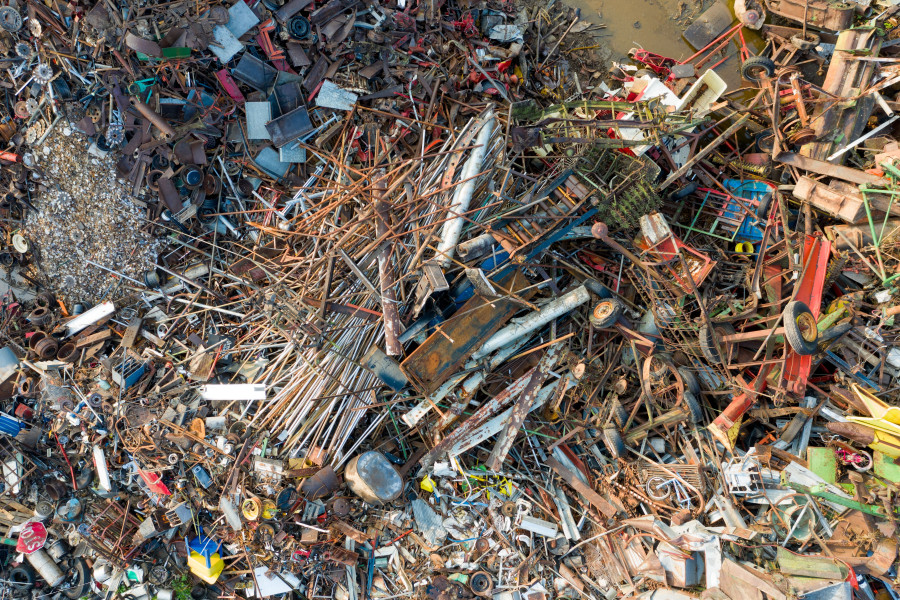
This is where urban mining comes in: recovering materials contained in discarded products and equipment. A phone, computer, cable or vehicle may contain copper, aluminum, iron and other valuable metals. What consumers see as waste can represent recoverable raw materials for industry. The International Energy Agency considers recycling an essential tool for improving the security and sustainability of critical mineral supplies. According to its projections, a successful expansion of recycling could reduce the need for new mining activity by 5% to 30% by 2040. Mining and recycling are complementary sources of supply.
Argentina has significant resources of lithium, copper, gold, silver and rare earth elements. In 2025, mining exports reached US$6.073 billion, with gold, lithium and silver accounting for 95.4% of that amount. This activity also generates electronic waste containing recoverable materials. However, turning this waste into resources requires assessing its composition and the feasibility of recovering its materials through appropriate processes. That is the role of urban mining: transforming waste into raw materials that can return to industrial use.
Urban Resources operates at precisely this stage of the value chain. From its own facility in the Ezeiza Industrial Park, the company requests samples of electronic circuit boards, analyzes them and conducts assays to determine their metal content and assess the feasibility of recovery. Only after this assessment does it accept the circuit boards, which must arrive already sorted. The company does not carry out this sorting or process boards whose composition has not yet been determined. This preliminary assessment is essential because technological advances tend to reduce the amount of metal used in components: some boards contain minimal quantities or too little metal to justify processing.
The challenge is to turn more and more waste into resources. Businesses, industrial companies, municipalities and cooperatives can all be part of this transformation. Get to know Urban Resources and discover how to turn electronic scrap and other metal waste into valuable resources for industry.